

1、Set基本数据类型
a、set集合,是一个无序且不重复的元素集合
class set(object):
  """
  set() -> new empty set object
  set(iterable) -> new set object

  Build an unordered collection of unique elements.
  """
  def add(self, *args, **kwargs): # real signature unknown
    """
    Add an element to a set,添加元素

    This has no effect if the element is already present.
    """
    pass

  def clear(self, *args, **kwargs): # real signature unknown
    """ Remove all elements from this set. 清楚内容"""
    pass

  def copy(self, *args, **kwargs): # real signature unknown
    """ Return a shallow copy of a set. 浅拷贝 """
    pass

  def difference(self, *args, **kwargs): # real signature unknown
    """
    Return the difference of two or more sets as a new set. A中存在,B中不存在

    (i.e. all elements that are in this set but not the others.)
    """
    pass

  def difference_update(self, *args, **kwargs): # real signature unknown
    """ Remove all elements of another set from this set. 从当前集合中删除和B中相同的元素"""
    pass

  def discard(self, *args, **kwargs): # real signature unknown
    """
    Remove an element from a set if it is a member.

    If the element is not a member, do nothing. 移除指定元素,不存在不保错
    """
    pass

  def intersection(self, *args, **kwargs): # real signature unknown
    """
    Return the intersection of two sets as a new set. 交集

    (i.e. all elements that are in both sets.)
    """
    pass

  def intersection_update(self, *args, **kwargs): # real signature unknown
    """ Update a set with the intersection of itself and another. 取交集并更更新到A中 """
    pass

  def isdisjoint(self, *args, **kwargs): # real signature unknown
    """ Return True if two sets have a null intersection. 如果没有交集,返回True,否则返回False"""
    pass

  def issubset(self, *args, **kwargs): # real signature unknown
    """ Report whether another set contains this set. 是否是子序列"""
    pass

  def issuperset(self, *args, **kwargs): # real signature unknown
    """ Report whether this set contains another set. 是否是父序列"""
    pass

  def pop(self, *args, **kwargs): # real signature unknown
    """
    Remove and return an arbitrary set element.
    Raises KeyError if the set is empty. 移除元素
    """
    pass

  def remove(self, *args, **kwargs): # real signature unknown
    """
    Remove an element from a set; it must be a member.

    If the element is not a member, raise a KeyError. 移除指定元素,不存在保错
    """
    pass

  def symmetric_difference(self, *args, **kwargs): # real signature unknown
    """
    Return the symmetric difference of two sets as a new set. 对称交集

    (i.e. all elements that are in exactly one of the sets.)
    """
    pass

  def symmetric_difference_update(self, *args, **kwargs): # real signature unknown
    """ Update a set with the symmetric difference of itself and another. 对称交集,并更新到a中 """
    pass

  def union(self, *args, **kwargs): # real signature unknown
    """
    Return the union of sets as a new set. 并集

    (i.e. all elements that are in either set.)
    """
    pass

  def update(self, *args, **kwargs): # real signature unknown
    """ Update a set with the union of itself and others. 更新 """
    pass
</div>
b、数据类型模块举例
se = {11,22,33,44,55}
be = {44,55,66,77,88}
# se.add(66)
# print(se)  #添加元素,不能直接打印!
#
#
#
# se.clear()
# print(se)     #清除se集合里面所有的值,不能清除单个
#
#
#
# ce=be.difference(se)  #se中存在,be中不存在的值,必须赋值给一个新的变量
# print(ce)
#
#
# se.difference_update(be)
# print(se)         #在se中删除和be相同的值,不能赋值给一个新的变量,先输入转换,然后打印,也不能直接打印!
# se.discard(11)
# print(se)          #移除指定元素,移除不存在的时候,不会报错
# se.remove(11)
# print(se)       #移除指定的元素,移除不存在的会报错
# se.pop()
# print(se)        #移除随机的元素
#
#
# ret=se.pop()
# print(ret)       #移除元素,并且可以把移除的元素赋值给另一个变量
# ce = se.intersection(be)
# print(ce)    #取出两个集合的交集(相同的元素)
# se.intersection_update(be)
# print(se)    #取出两个集合的交集,并更新到se集合中
# ret = se.isdisjoint(be)
# print(ret)     #判断两个集合之间又没有交集,如果有交集返回False,没有返回True
# ret=se.issubset(be)
# print(ret)     #判断se是否是be集合的子序列,如果是返回True,不是返回Flase
# ret = se.issuperset(be)
# print(ret)     #判断se是不是be集合的父序列,如果是返回True,不是返回Flase
# ret=se.symmetric_difference(be)
# print(ret)     #对称交集,取出除了不相同的元素
# se.symmetric_difference_update(be)
# print(se)     #对称交集,取出不相同的元素并更新到se集合中
# ret = se.union(be)
# print(ret)     #并集,把两个元素集合并在一个新的变量中
</div>
2、深浅拷贝
a、数字和字符串
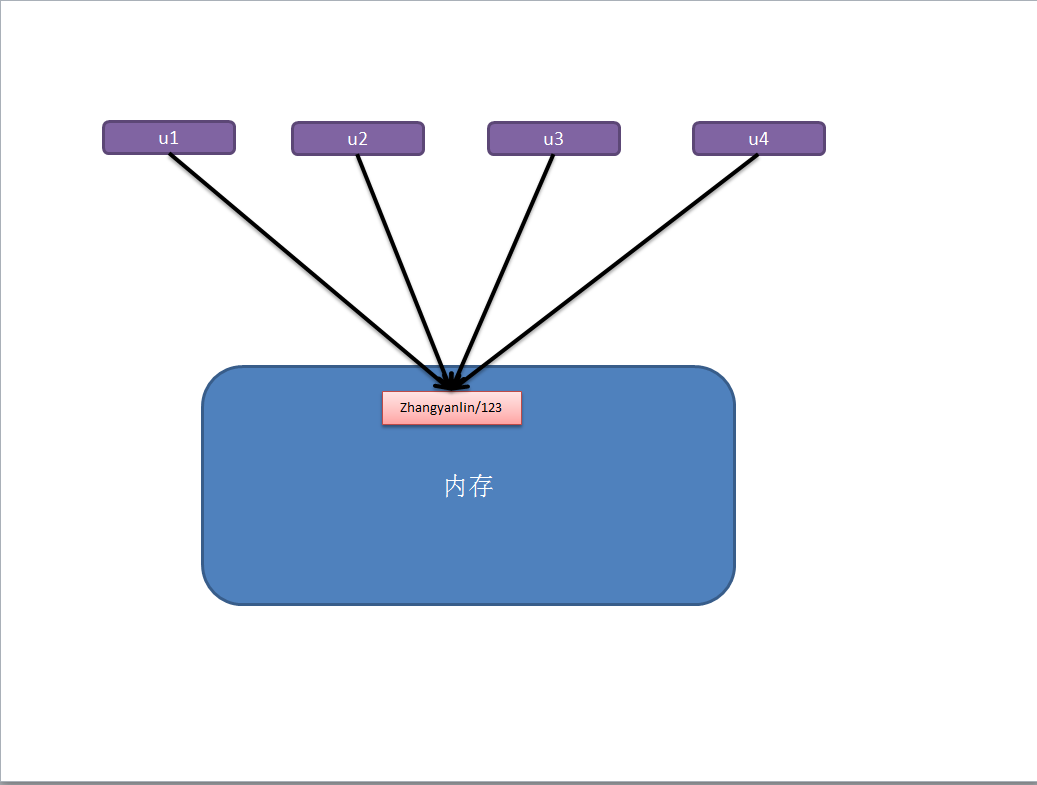
对于 数字 和 字符串 而言,赋值、浅拷贝和深拷贝无意义,因为其永远指向同一个内存地址。
import copy
# ######### 数字、字符串 #########
n1 = 123
# n1 = "i am alex age 10"
print(id(n1))
# ## 赋值 ##
n2 = n1
print(id(n2))
# ## 浅拷贝 ##
n2 = copy.copy(n1)
print(id(n2))

# ## 深拷贝 ##
n3 = copy.deepcopy(n1)
print(id(n3))
</div>
b、其他基本数据类型
对于字典、元祖、列表 而言,进行赋值、浅拷贝和深拷贝时,其内存地址的变化是不同的。
1、赋值
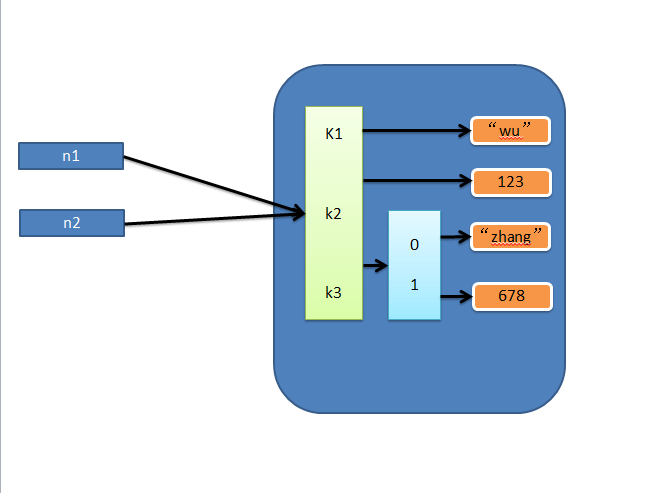
赋值,只是创建一个变量,该变量指向原来内存地址,如:
n1 = {"k1": "zhangyanlin", "k2": 123, "k3": ["Aylin", 456]}
n2 = n1
</div>
2、浅拷贝
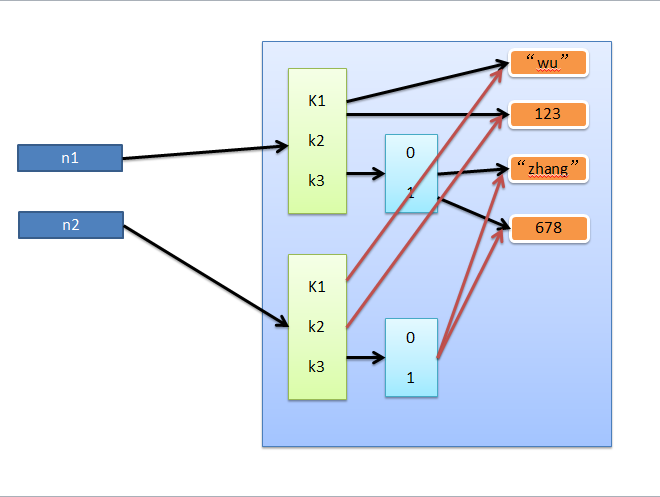
浅拷贝,在内存中只额外创建第一层数据
import copy
n1 = {"k1": "zhangyanlin", "k2": 123, "k3": ["aylin", 456]}
n3 = copy.copy(n1)
</div>
3、深拷贝
深拷贝,在内存中将所有的数据重新创建一份(排除最后一层,即:python内部对字符串和数字的优化)
3、函数
函数式:将某功能代码封装到函数中,日后便无需重复编写,仅调用函数即可
面向对象:对函数进行分类和封装,让开发“更快更好更强...
.函数的定义主要有如下要点:
def:表示函数的关键字
函数名:函数的名称,日后根据函数名调用函数
函数体:函数中进行一系列的逻辑计算,如:发送邮件、计算出 [11,22,38,888,2]中的最大数等...
参数:为函数体提供数据
返回值:当函数执行完毕后,可以给调用者返回数据。
1、返回值
函数是一个功能块,该功能到底执行成功与否,需要通过返回值来告知调用者。
以上要点中,比较重要有参数和返回值:
def 发送短信():

  发送短信的代码...

  if 发送成功:
    return True
  else:
    return False


while True:

  # 每次执行发送短信函数,都会将返回值自动赋值给result
  # 之后,可以根据result来写日志,或重发等操作

  result = 发送短信()
  if result == False:
    短信发送失败...
</div>
函数的有三中不同的参数:
普通参数
# ######### 定义函数 #########
# name 叫做函数func的形式参数,简称:形参
def func(name):
print name
# ######### 执行函数 #########
# 'zhangyanlin' 叫做函数func的实际参数,简称:实参
func('zhangyanlin')
默认参数
def func(name, age = 18):
print "%s:%s" %(name,age)